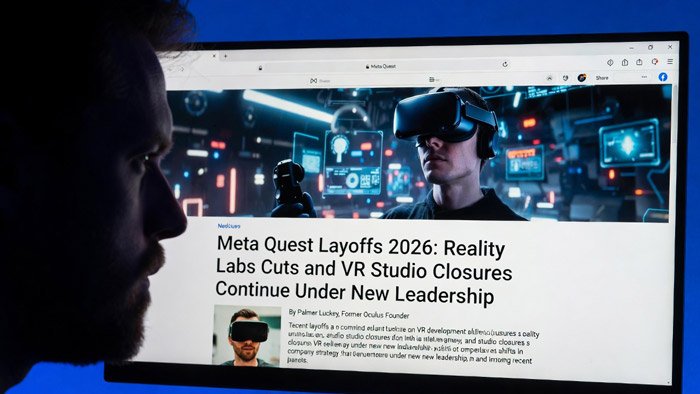
In the fast-evolving world of virtual reality (VR), one question is dominating discussions in 2026: Is Meta abandoning VR? With massive layoffs in Reality Labs, studio closures, and a clear pivot toward artificial intelligence (AI), Mark Zuckerberg’s once-bold metaverse vision seems to be fading. This shift from metaverse to AI in 2026 has sparked debates among VR enthusiasts, industry analysts, and investors.

While some see it as the end of an era for Meta Quest headsets, others argue it’s a strategic realignment to more profitable tech frontiers like AI wearables. In this analysis, we’ll dive into the details, exploring what these changes mean for the future of VR and Meta’s role in it.
The Metaverse Dream: A Brief History of Meta’s VR Ambitions
Meta’s journey into VR began in earnest with the 2014 acquisition of Oculus, a move that positioned the company as a pioneer in immersive technology. By 2021, Zuckerberg rebranded Facebook to Meta, signaling a full commitment to the metaverse—a virtual world where people could work, play, and socialize. Billions were poured into Reality Labs, the division behind Meta Quest headsets like the Quest 3 and Quest 3S, as well as platforms such as Horizon Worlds.
Use VRCGUY as your Discount Code for all VR Downloads
However, the financial toll has been immense. Reality Labs has racked up over $70 billion in losses since late 2020, with some estimates reaching $77 billion. Despite launching popular hardware, widespread adoption of the metaverse lagged behind expectations. Horizon Worlds, for instance, struggled to compete with established platforms like Roblox, and VR headset sales have slowed amid economic pressures. This backdrop sets the stage for Meta’s dramatic pivot in 2026, raising questions about whether the company is truly abandoning VR or simply reallocating resources.
Recent Layoffs and Studio Closures: The Hard Numbers
January 2026 marked a turning point with Meta announcing layoffs affecting approximately 1,500 employees—about 10% of Reality Labs’ workforce. These cuts primarily targeted teams focused on VR hardware, metaverse projects, and game development. Several in-house studios were shuttered, including:
- Twisted Pixel: Known for VR titles like Marvel’s Deadpool VR.
- Sanzaru Games: Developers of acclaimed games such as Asgard’s Wrath.
- Armature Studio: Behind Resident Evil 4 VR.
Additionally, the VR fitness app Supernatural, acquired by Meta in 2023 for $400 million, is transitioning to “maintenance mode” with no new content planned. Camouflaj, the studio responsible for Batman: Arkham Shadow, also faced significant reductions.
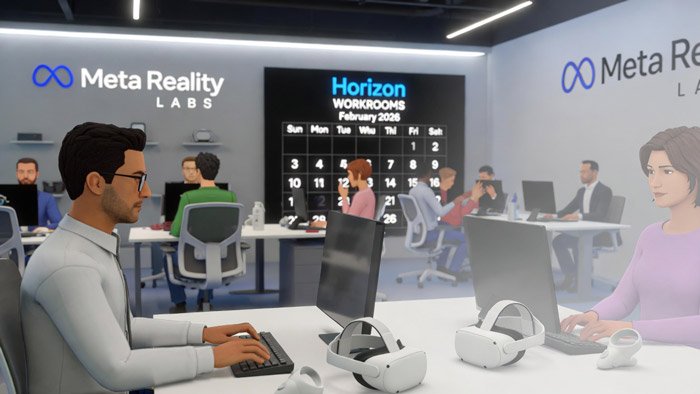
Beyond games, Meta is discontinuing enterprise-focused initiatives. The Quest for Business program will halt sales in February 2026 and fully shut down by 2030, while Horizon Workrooms—a VR meeting tool—is closing next month. These moves underscore a broader deprioritization of immersive VR experiences in favor of more immediate revenue drivers.
for more VR discount codes links visit metacodes.com
On X (formerly Twitter), users and insiders have reacted strongly. One post highlighted the pivot: “Meta abandons the headset for the glasses… The Metaverse isn’t a place you go to; it’s an AI layer over the real world.” Another noted, “Meta’s VR layoffs, studio closures underscore Zuckerberg’s massive pivot to AI.” These sentiments reflect a community grappling with the rapid changes.
Why the Shift? Financial Pressures and AI’s Allure
The primary driver behind Meta’s shift from metaverse to AI in 2026 is financial sustainability. Reality Labs’ staggering losses—$4.4 billion in a single quarter—have become untenable, especially as AI technologies explode in popularity. Zuckerberg has openly acknowledged this, stating in December 2025 that resources would be redirected from VR toward AI glasses and wearables.
AI wearables, like the Ray-Ban Meta smart glasses, are showing promise with surging demand. Meta plans to double or triple production in 2026, aiming for 20 million units. This contrasts sharply with VR’s slower growth. Analysts point to poor metaverse adoption and competition from devices like Apple’s Vision Pro as factors accelerating the pivot.
Moreover, the broader tech landscape favors AI. Zuckerberg’s “obsession” with AI has led to investments like the $14.3 billion acquisition of Scale AI and the creation of Meta Compute for AI infrastructure. As one industry observer noted on X, “Meta cuts around 10% of Reality Labs jobs as the company shifts focus from VR and metaverse to AI and wearables.” This realignment aims to make Reality Labs more “sustainable” while capitalizing on AI’s momentum.
Expert Opinions: Is Meta Really Abandoning VR?
Not everyone agrees that Meta is abandoning VR. Oculus founder Palmer Luckey took to X to defend the company: “The ‘Meta is abandoning VR’ narrative is obviously false, 10% layoffs is basically six months of normal churn concentrated into 60 days.” Luckey argues that Meta remains the dominant player in VR hardware, with no close competitors, and views studio closures as beneficial for the industry’s long-term health.
Meta executive Dilmer Valecillos echoed this, assuring that the company is “not abandoning virtual reality” despite the cuts. However, critics like those on Reddit’s r/virtualreality subreddit point out that Reality Labs encompasses more than VR, including AR and robotics, but the layoffs disproportionately hit VR teams.
A balanced view from Tom’s Guide suggests that while actions “scream the opposite,” Meta isn’t exiting VR entirely—it’s just de-emphasizing it. Projects like Project Phoenix (a lightweight Quest successor rumored for 2027) indicate ongoing hardware development.
Impact on Meta Quest Users and the VR Ecosystem
For Quest owners, the shift raises concerns about future support. With first-party game development scaling back, users may see fewer exclusive titles. However, Meta is reorienting Horizon Worlds toward a mobile-first, kid-friendly experience to attract younger users, similar to Roblox. Third-party developers could fill the gap, but the loss of funding (e.g., $60 million for VR games in 2026) might slow innovation.
Broader implications include a potential slowdown in VR adoption. As Meta pivots, competitors like Apple and Sony may gain ground. Yet, for African startups and global developers, this opens doors to AI-driven wearables and mobile AR solutions, which promise faster adoption than full VR.
The Future of VR: Pivot or Abandonment?
So, is Meta abandoning VR? The evidence points to a significant deprioritization rather than a full exit. While the metaverse hype has cooled, Meta’s continued investment in hardware like the Quest 4 suggests VR isn’t dead—it’s evolving into hybrid AI-VR experiences. The shift to AI in 2026 reflects broader industry trends, where ambient computing (e.g., smart glasses) may overtake immersive VR.
For VR gamers and enthusiasts, this is a wake-up call to diversify. Meta’s pivot could ultimately strengthen the ecosystem by focusing on profitable innovations. As Zuckerberg steers toward AI wearables, the metaverse might not be abandoned but transformed—blending virtual and real worlds in ways we haven’t yet imagined.
What do you think? Share your thoughts in the comments below, and stay tuned to MetaQuestNews.com for more updates on the Quest future and VR industry analysis.