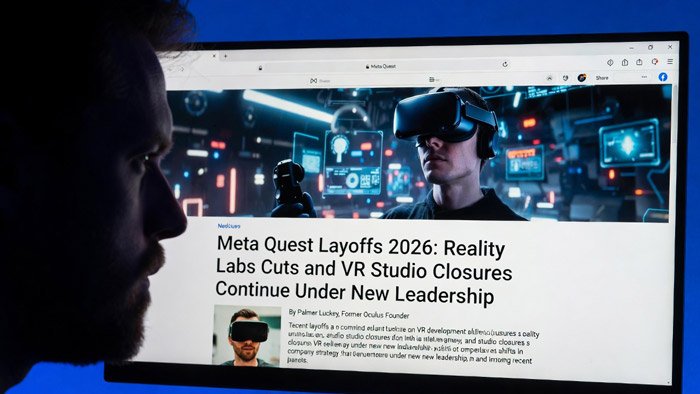
The Meta Quest ecosystem has been a cornerstone of standalone VR since the Quest 2 launched in 2020, but January 2026 brought sobering news for enterprise users. Meta officially announced the end of its dedicated commercial VR offerings, including the Meta Quest for Business program (now called Meta Horizon Managed Services) and the shutdown of Horizon Workrooms. While consumer Quest headsets remain unaffected, this marks a clear retreat from Meta’s earlier ambition to power the “metaverse for work.”
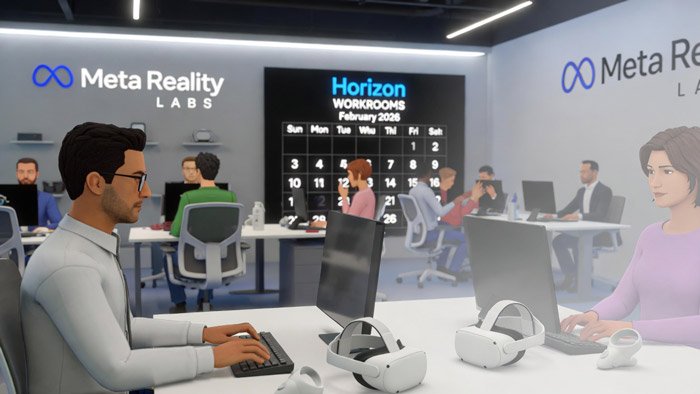
In this post, we’ll break down exactly what is changing with the Meta Quest for Business shutdown, the key dates you need to know, why Meta is making this move, and what alternatives exist for businesses still betting on VR.
What Exactly Is Being Shut Down?
Meta’s commercial VR support revolved around two main pillars:
- Meta Horizon Managed Services (formerly Quest for Business)
This was the enterprise suite that allowed companies to:
- Purchase dedicated commercial SKUs of Quest 3 and Quest 3S headsets
- Manage fleets of devices centrally (MDM-style)
- Use “Shared Mode” or “Individual Mode” for kiosk-style or assigned-user deployments
- Access priority support and business-specific licensing
- Horizon Workrooms
Launched in 2021 as Meta’s flagship VR meeting app, Workrooms let teams join virtual offices with avatar-based collaboration, shared whiteboards, and PC desktop mirroring.
Both are now winding down – but on different timelines.
Key Dates for the Meta Quest for Business Shutdown
| Date | What Happens |
|---|---|
| February 16, 2026 | Horizon Workrooms shuts down completely. All user data will be deleted. |
| February 20, 2026 | Sales of commercial Quest SKUs and new Horizon Managed Services subscriptions stop. Existing subscriptions drop to $0/month. |
| January 4, 2030 | Full end-of-support for Horizon Managed Services. Features will stop working on Quest 3/3S. |
Important: Consumer Quest headsets (Quest 3, Quest 3S) are not affected by the 2030 cutoff. Businesses can still use regular consumer models with the free tier of managed services until then.
Use Discount Code VRCGUY for VR download Discounts
Why Is Meta Ending Commercial VR Support?
Meta hasn’t explicitly said “we failed,” but the writing has been on the wall:
- Low enterprise adoption: Despite years of promotion, very few large companies made VR meetings or training mandatory.
- Massive Reality Labs losses: The division has lost over $70 billion since 2020, with billions more quarterly.
- Strategic pivot: Mark Zuckerberg and CTO Andrew Bosworth have repeatedly signaled a shift toward AI and lightweight AR glasses (like Ray-Ban Meta) rather than bulky VR headsets for work.
- Competition heating up: Apple Vision Pro and upcoming Android XR devices are pushing Meta to focus on a broader “spatial computing” platform rather than niche business tools.
As Meta stated in their official update: “We remain committed to VR for the long term,” but resources are clearly being reallocated.
What This Means for Current Business Users
- Existing deployments keep working (for now) – and managed services become free after February 20.
- No more official commercial-grade hardware or paid enterprise support.
- Horizon Workrooms data will vanish on February 16 – export anything important now.
- Consumer Quest headsets + free managed tools can still handle many enterprise needs until 2030.
Best Alternatives for Enterprise VR in 2026
Thankfully, the VR ecosystem is bigger than one company. Here are proven replacements many organizations are already using:
| Use Case | Top Alternatives | Notes |
|---|---|---|
| Device Management (MDM) | ManageXR, ArborXR, VMware Workspace ONE | Full kiosk mode, remote app deployment, robust reporting |
| Virtual Meetings | Arthur, Immersed, Spatial, Microsoft Mesh, Zoom for Quest | Avatar or realistic meetings; PC monitor mirroring |
| Training & Collaboration | VictoryXR, Talespin, Mursion | Industry-specific solutions (healthcare, manufacturing, etc.) |
| Full Enterprise Platforms | Pico Business Suite (ByteDance), Varjo Enterprise | Dedicated business headsets with long-term support |
Many of these integrate directly with Quest headsets today, and consumer Quest models are perfectly capable for most enterprise workloads.
Final Thoughts: A Turning Point, Not the End of VR
The Meta Quest for Business shutdown is undoubtedly a setback for anyone who believed VR would replace Zoom calls overnight. It reflects the reality that immersive work tools still face hurdles around comfort, cost, and widespread adoption.
That said, consumer Quest remains one of the best-selling VR platforms ever, and third-party enterprise solutions are maturing fast. If your organization is invested in VR for training, design reviews, or remote collaboration, now is the time to explore independent MDM providers and apps that aren’t tied to Meta’s roadmap.
The metaverse office may have arrived too early – but spatial computing for work is far from dead.